Mar 9, 2026
From Founder to Architect
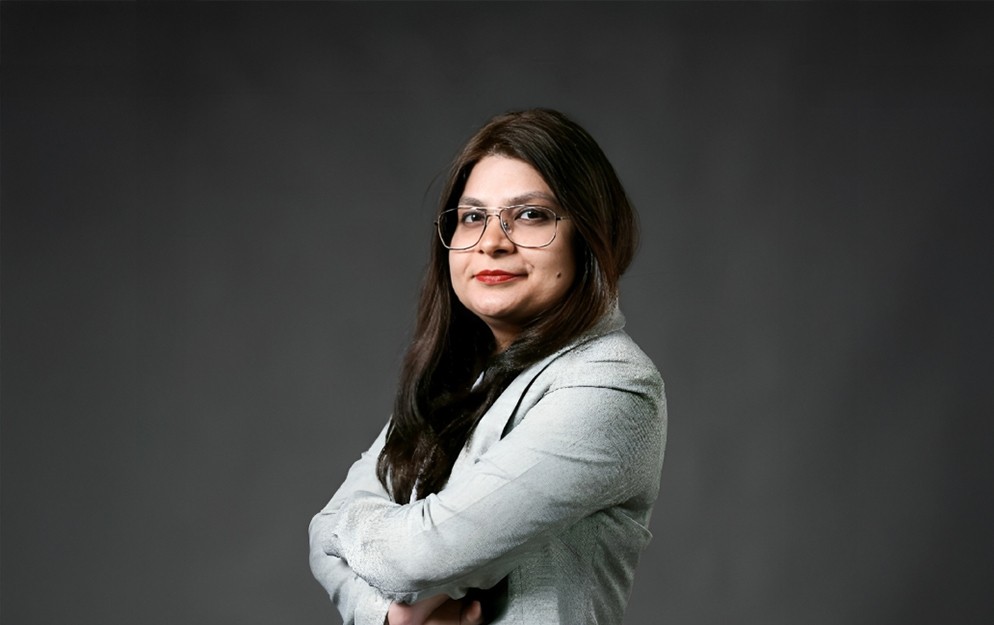
Stop obsessing over the perfect launch. Start obsessing over brutal alignment.
Most founders treat their early scars as backstory. Wajiha Khalid treats them as data.
She built two companies. Competed against 600 applicants for an analyst seat at Mobilink. Navigated a telecom industry 360-degree data mapping for critical customer touchpoints by rebuilding her toolkit, not waiting for conditions to improve. Each experience produced the same outcome: a clearer model of why startups fail to scale, not to build. That model is what she brought to Disrupt.com.
The 0–1 Problem Few Ace Correctly
Having built at COVIS and Cubex Global, Wajiha can identify a company’s structural failure mode before the founder can articulate it. She calls them founder scars - not failures, not mistakes. Scars, because they stay in the tissue and shape every decision after.
The Patterns She Keeps Her Caution Lights On For
Perfectionism over speed. A version the market hasn’t seen is a version that doesn’t exist. In an AI-accelerated market, the gap between polishing and losing is measured in weeks.
Logo over logic. Brand investment before usage validation. A sign the founder is building confidence, not product.
Hiring for hype. Scaling a team before the market confirms the problem. You don’t scale a leaky bucket.
PR before retention. Chasing press while churn is unsolved. The story should follow the system, not substitute for it.
Brutal Alignment
In the 0–1 phase, growth is not a function. It’s a diagnostic. Most early-stage companies don’t fail at execution - they fail at alignment between product and market, conviction and evidence, what the founder believes and what the customer confirms.
Growth isn’t a miracle. It’s the brutal alignment of product, market, and ego.
In MENA specifically, the speed-to-lead gap has effectively closed. Autonomous agents now qualify prospects in seconds. The companies aligning with cultural nuances and local regulations that win will be those that were designed for this from the start - not the ones that retrofitted.
Reframe the Vocabulary
Wajiha refuses the soft/hard leadership dichotomy. Her reframes are operational:
Empathy is a speed mechanism. Understanding what your team and customers actually need removes friction faster than any process change.
Adaptability is not flexibility. It’s reading what the mission requires and adjusting without losing conviction. Style is variable. Standards are not.
When you speak the language of data, it’s much harder for anyone to argue with your results. Don’t just be passionate. Be provable.
Why the Venture Lab Model Works
The move from founder to operator inside a venture studio isn’t a step down in risk tolerance. It’s a step up in leverage.
Lone-wolf building produces hard-earned intuition. It also produces waste - every insight extracted once, applied once, then lost when the company pivots or closes. At Disrupt.com, validated frameworks compound across ventures. Pattern recognition becomes infrastructure. Decisions run on evidence, not instinct.
Structure before speed.
Conviction before expansion.
Outcomes over noise.
Wajiha Khalid didn’t just learn these principles. She built the scar tissue that makes them mean something.