Apr 6, 2026
The De-Risked Founder: Inside the Playbook That Eliminates Early-Stage Failure
According to CB Insights' 2024 analysis of 431 failed VC-backed companies, 43% of startups fail because of poor product-market fit. Not because founders lack talent. Not because the idea is bad. But because they skip validation and go straight to building.
At Disrupt.com, the approach flips that sequence entirely.
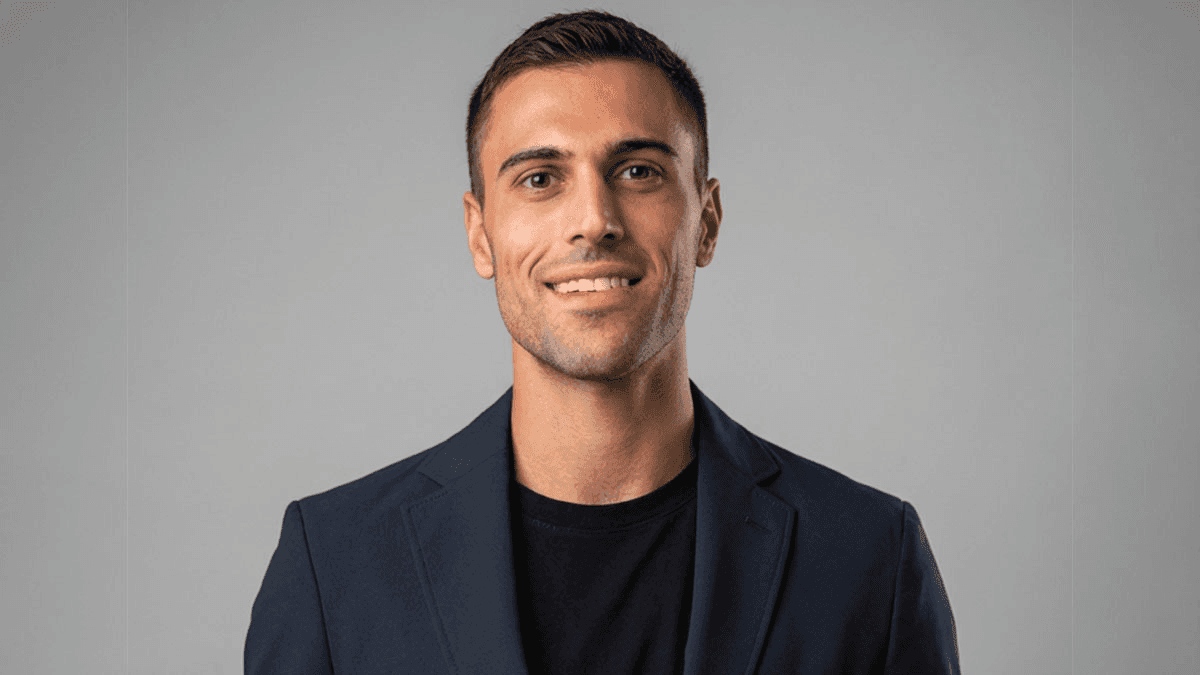
Yasser Tsikhlakis, Forbes 30 Under 30 honoree, operates within this model. His focus is not just building startups, but removing the most common early-stage failure patterns before they happen.
The Talent Moat: Execution Starts Before You Build
Most founders spend their first 12 to 18 months trying to create the conditions to execute:
Finding a technical co-founder
Building an engineering pipeline
Establishing early GTM relationships
By the time those pieces come together, momentum is gone, and the runway is tight.
At Disrupt, those constraints are removed upfront.
Instead of building everything from scratch, founders operate inside an environment where engineering, GTM expertise, and capital access already exist. The shift is subtle but powerful:
You don’t spend time assembling resources.
You spend time deploying them.
This is where the model differs from traditional venture studios. It is not a collection of isolated projects. It is a shared system where founders collaborate, learn faster, and execute with leverage.
The outcome is simple: execution begins on day one.
The 60-Day Framework: Validation Before Product
Every venture follows a structured 60-day sequence. Not as a guideline, but as a constraint.
Days 1 to 20
Define the micro-problem. Not the big vision, but the specific friction point blocking a user.
Days 21 to 40
Run high-volume customer conversations to identify real pain. No assumptions. No surveys. Direct signal.
Days 41 to 60
Secure an LOI or pilot commitment before building anything. No commitment, no product.
This framework exists to eliminate the most common trap: building before validation.
Founders often mistake activity for progress. Writing code feels like momentum. But without market confirmation, it is just risk.
At Disrupt, the order is fixed: Market first. Product second.
Distribution Is the New Bottleneck
The question used to be:
Can this be built?
That question no longer matters as much.
According to the Stanford HAI AI Index 2025, the cost of running systems at GPT-3.5 level dropped more than 280-fold between 2022 and 2024.
Building is no longer the constraint.
Distribution is.
Every decision is filtered through one lens:
Does this reduce friction in the sales cycle?
Does this strengthen a defensible data position?
If not, it does not ship.
AI, in this context, is not about flashy features. It is about compressing timelines. Research that once took weeks now runs in hours. Signal collection that needed teams can now be automated.
The advantage is not in building faster.
It is in learning faster.
Version One Is Not a Product
The biggest mindset shift in this model is simple:
Version one is not a product.
It is a data collection system.
This changes everything.
A failed version one is not failure. It is validated learning. It provides the signal needed to build version two correctly.
Founders who get stuck treat v1 as the final answer.
Founders who scale treat it as the first input.
Progress comes from speed of iteration, not perfection of output.
A System, Not a One-Off Outcome
What emerges from this approach is not just a startup. It is a repeatable system for building them.
The model reduces three of the biggest early-stage risks:
Lack of validation
Isolation in execution
Weak distribution strategy
What remains is a controlled environment where founders can focus on decisions, not survival.
The Entrepreneur in Residence structure is one way this system is operationalized at Disrupt. But the core advantage is not the title. It is the infrastructure, the constraints, and the sequencing behind how ventures are built.
The only variable that changes is speed.