Contents
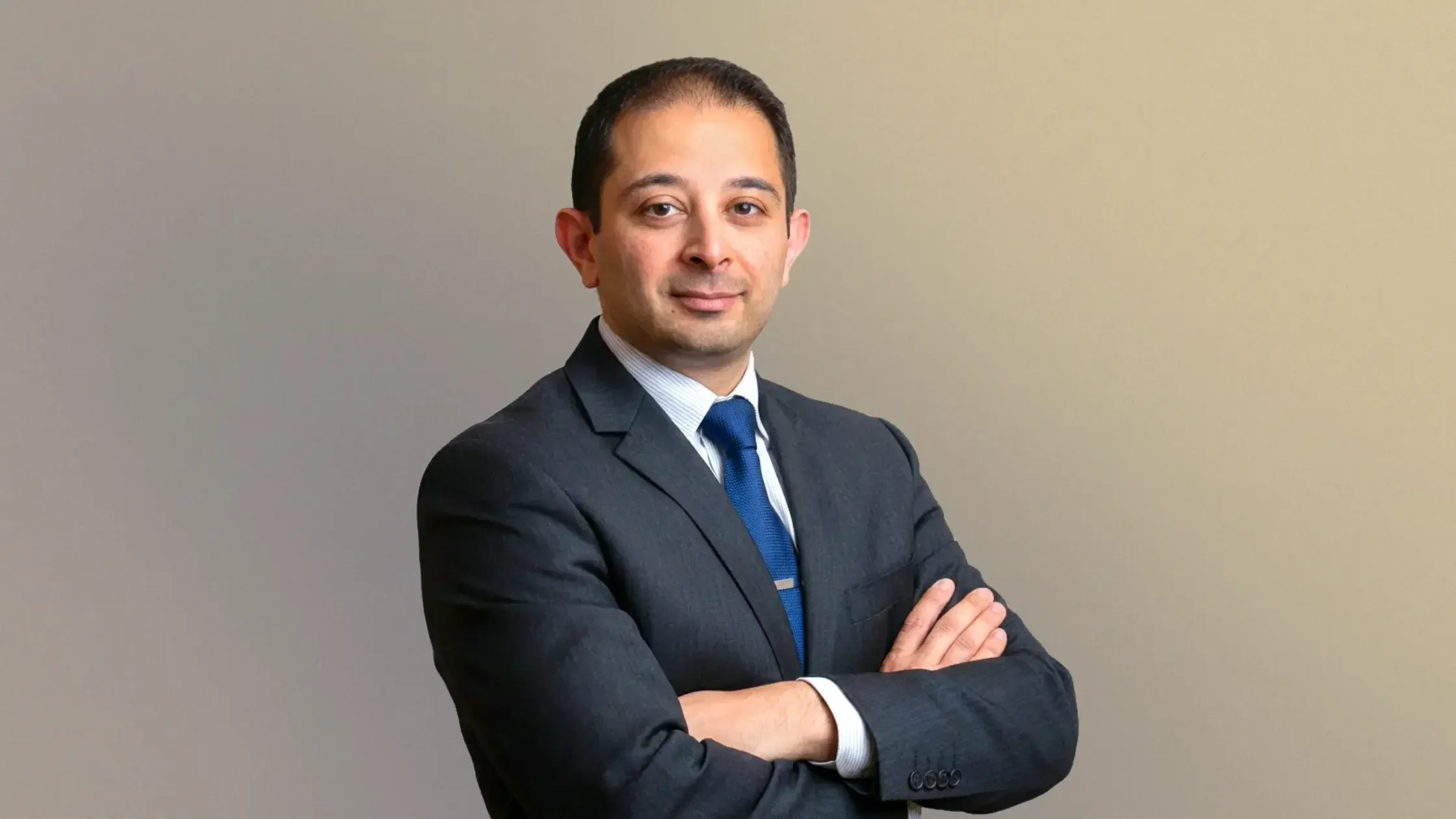
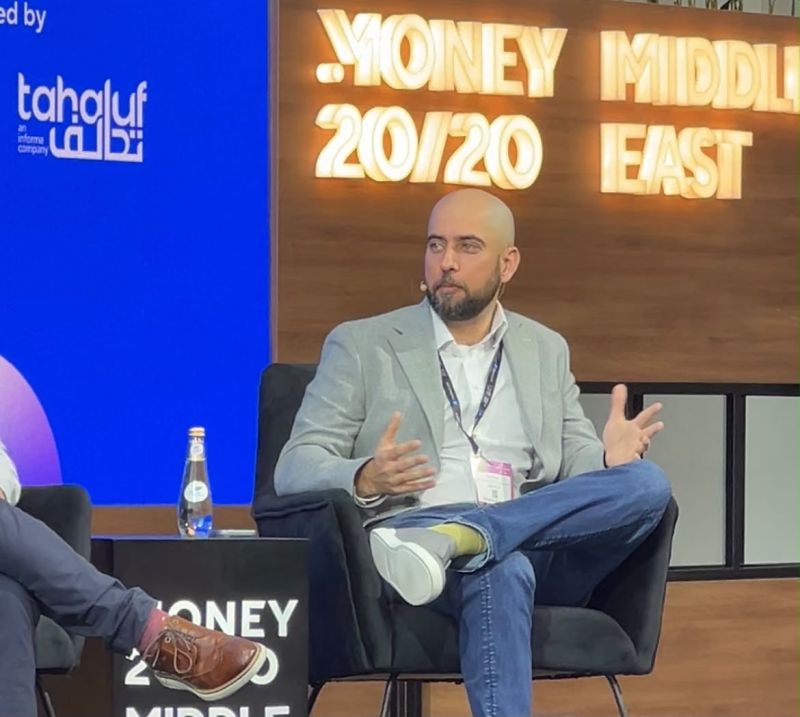
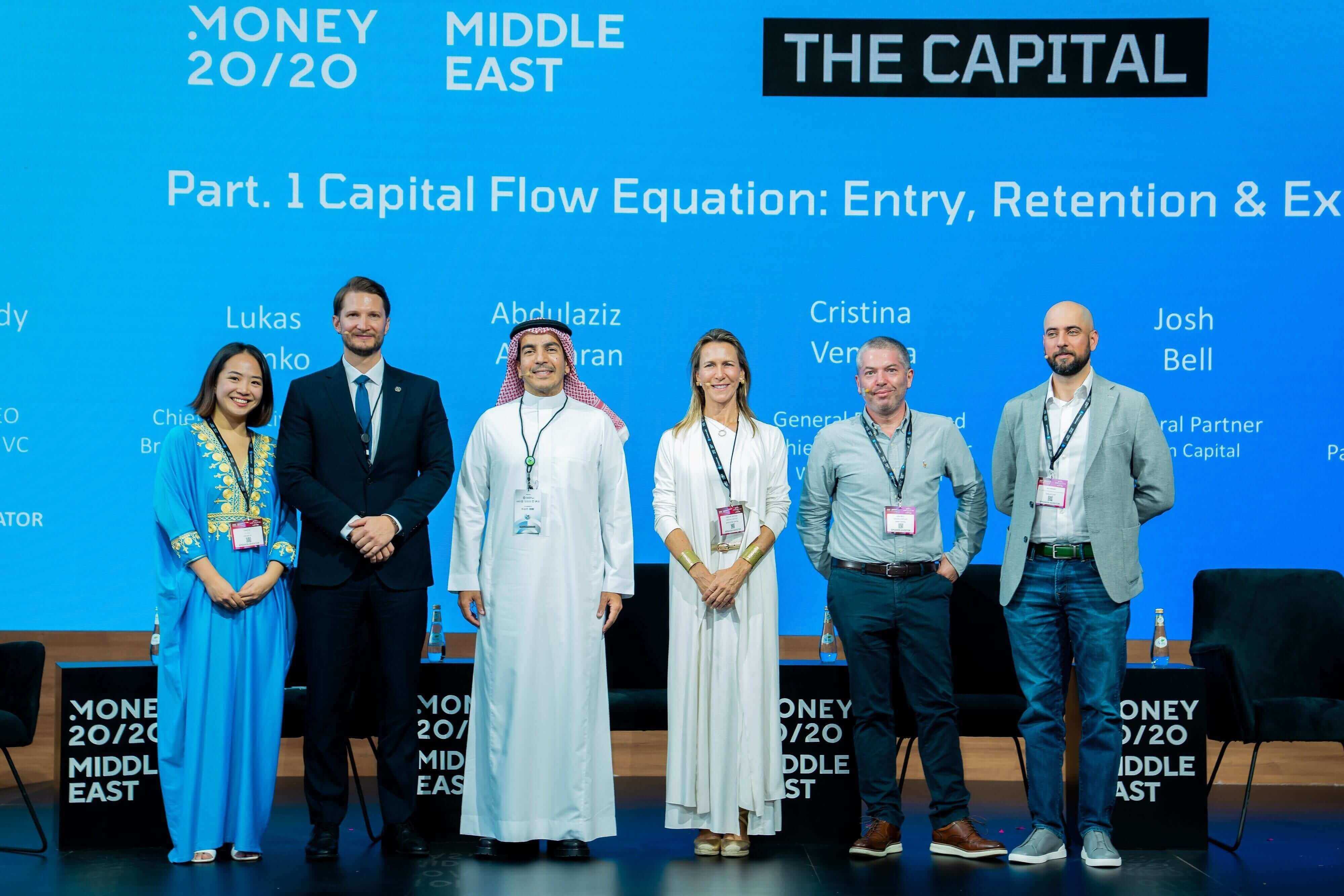
At Money20/20 Middle East 2026 in Riyadh, Ali Samir Oosman, SVP of Strategy, Partnerships and Investments, framed the region's real constraint on the Capital Flow Equation panel:
The region does not have a capital problem. It has an absorption problem. Capital is an input; the binding constraint is the supply of companies that can convert capital into enterprise value, and that supply has to be built, not waited for. ALI SAMIR OOSMAN SVP – Strategy, Partnerships & Investments, Disrupt.com
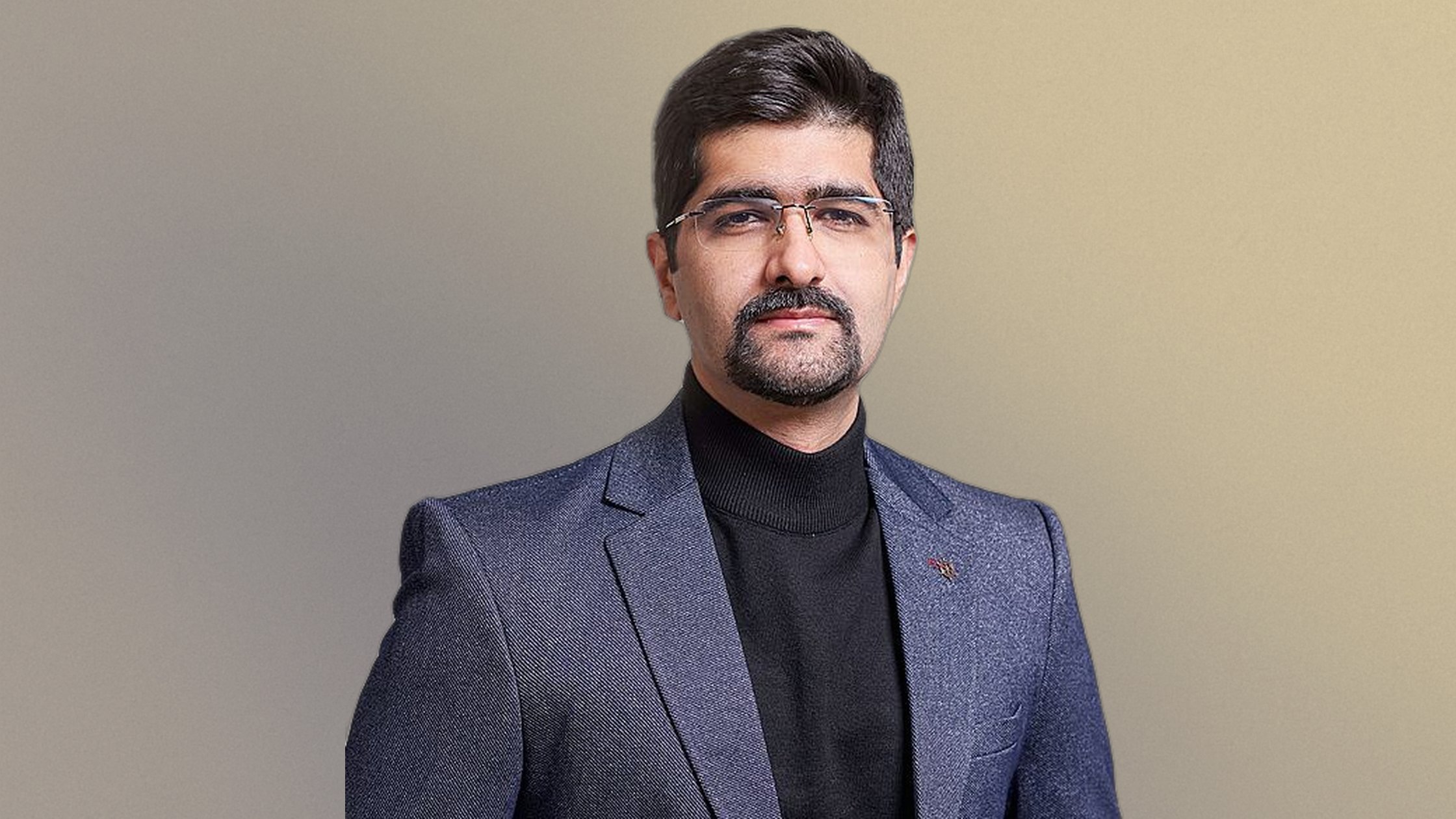
Dr. Jonathan Doerr, SVP of Venture Building, spoke in a separate session. Doerr's session showed what that looks like when a company is AI-native from day one, part of a broader shift already underway: Disrupt is transforming its own operations to be AI-native across every function and department.
Disrupt spent the week connecting with leaders across investment and financial services, from old relationships to new ones, including Conjunction Capital, Gobi Ventures, Zayn VC, Impact 46, Speedinvest, Khwarizmi Ventures, Endeavor Saudi, Colabs, the Ministry of Investment Saudi Arabia, Dream VC, White Star Capital, Dawn Capital, and others. As Ali Samir Oosman put it, Disrupt is excited about the opportunity to build globally focused ventures from Saudi and the region, energized by the response from senior leaders in government and corporates who want to help Disrupt enter the market and build with Saudi founders. That approach starts from the same premise as the thesis above: Disrupt is a cofounder and an investor, hands on, in every venture it builds, not a cheque-writer at a distance.
Entry Is Not Where Capital Gets Stuck
The data says entry is largely solved. MENA-based investors accounted for 81 percent of H1 2026 funding, the highest share in five years. Sovereign and family-office capital is not sitting on the sidelines waiting for permission to enter.
What still slows things down is regulatory fragmentation, not capital access.
MENA isn't a market. It's a region of markets and in fintech particularly, every one of them regulates differently which impacts speed, scale and capital efficiency. ALI SAMIR OOSMAN SVP – Strategy, Partnerships & Investments, Disrupt.com
A fintech that clears regulatory approval in the UAE starts from zero in Saudi Arabia. That resets speed and capital efficiency every time, even when the capital itself is ready to move.
Deployment Is Where Value Actually Disappears
The clearest evidence sits in the H1 2026 numbers, drawn from MAGNiTT via EnterpriseAM. MENA venture funding totaled 1.35 billion dollars, down 22 percent year over year. Deal count fell to 214, down 41 percent, the fewest in a half-year period since at least 2022. Early-stage deals dropped more than 50 percent, the truest read of appetite in the region, and pre-seed deal velocity still has not caught up. The top 10 deals absorbed 58 percent of all capital, with the top 2 rounds alone accounting for 36 percent. Capital did not leave the region, in Oosman's words the region "optimised the top of the funnel for a decade and the middle of the funnel for almost nothing," pooling into a small number of assets because there were not enough others positioned to absorb it.
Short of Capital or Short of Companies
Put directly on stage, the answer was more specific than the thesis alone suggests. The region is short of capital at two extremes, genuine pre-seed conviction capital, and growth rounds above 50 million dollars that don't require a foreign lead. In the middle, capital is not the constraint. Companies positioned to absorb it are.
Drawing on engagement with more than 6,000 startups across MENAP, Oosman named four specific gaps stopping companies from absorbing the capital that is available. The region has plenty of first-time founders and very few second-time operators, because it has produced almost no exits to create them, and repeat founders are the highest-yield asset in any market. Most regional B2B revenue sits behind government and large-enterprise procurement, which makes it difficult for a company to grow into a 20 million dollar round on an 18-month sales cycle with a ministry as the reference customer. Companies built for bootstrapped survival often cannot pass institutional diligence once external capital arrives, a rational starting point rather than a founder failing. And a founder can be hired, but a Head of Risk, a CFO who has closed an audit, or a growth lead who has scaled past 10 million dollars in recurring revenue cannot be hired as easily, and that layer is what actually absorbs capital.
Fintech carries a fifth constraint the other sectors do not: a fintech cannot absorb capital faster than its licence perimeter allows. Thirty million dollars wired into a payments company with a licence covering one market and one product buys burn, not scale, which makes regulatory throughput an absorption variable worth measuring in its own right.
Retention Depends on Information, Not Momentum
Turning a first cheque into sustained commitment is not about conviction alone. Investors re-up on cash returned, not on paper marks, and every regional portfolio is carrying valuations it has never actually tested.
Visibility up the capital stack matters just as much: international capital currently leads 69 percent of Series A rounds and 48 percent of Series B and later, which means a local seed investor is effectively betting on a foreign investor's continued appetite for the region, not on the company alone. The cheapest retention tool available is a reporting standard, consistent KPIs, cohort economics, and a governance calendar run at private-equity grade, since investors rarely leave because the numbers are bad. They leave because there are no numbers at all. Conviction, in other words, is manufactured by information, not by momentum.
AI-Native Systems Are Disrupt's Answer to the Absorption Gap
Disrupt's response to that diagnosis is structural, not promotional. Disrupt is an AI-native venture builder, bootstrapped, headquartered in Dubai, operating across Pakistan, the UAE, and global markets. Disrupt Labs builds ventures. Disrupt Capital takes minority positions. The work spans five clusters: cybersecurity, wealth on-chain, product and growth, physical AI, and retail and consumer. In Oosman's words, Disrupt does not fund companies, it manufactures them, through a four-stage gate, ideation, validation, MVP, and acceleration, where capital is released against evidence rather than narrative.
Every venture inherits an institutional spine on day one: product, growth, security, finance, and governance already in place, the same institutional foundation a standalone seed company otherwise spends three years and two funding rounds trying to build. Roughly half of what Disrupt builds will not work, and the model is built to survive that rather than pretend otherwise. Proof points are public: Cloudways sold to DigitalOcean for 350 million dollars, alongside PureSquare and PureVPN, ZigChain, Secure.com, and SQUATWOLF, with partnerships including Samsung, OpenText, and Quantinuum.
Doerr's session showed what that institutional spine looks like once AI is structural rather than a feature bolted onto existing operations. His answer to what replaces headcount is systems, not people: what context an agent operates with, what tools it has access to, and where its boundaries sit. Responsibility does not move to the agent.
The human in the loop, at the end of the day, will still take the responsibility for the outcome. Even if you build a twenty billion dollar company with one employee, the CEO, he will still be responsible for what the company generates. We will not push that responsibility to AI. DR. JONATHAN DOERR SVP – Venture Building, Disrupt.com

The clearest example sits inside governance itself. A Disrupt portfolio company tokenizing natural assets needed due diligence that normally takes a bank three months and costs fifty thousand dollars. An agent built by the company did it in a few hours, and surfaced findings the manual process had missed entirely. The regulatory requirement did not change. What it costs to meet that requirement did.
Exit Needs Buyers, Not More Listings
Two or three sizable IPOs a year cannot clear a decade of vintages, and this is not a regional problem alone: global software IPOs fell from 27 in 2021 to roughly 6 pure-play listings across 2025 and 2026, several trading below their last private round. An IPO only counts as a real exit if it passes three tests: a real float rather than a 10 percent sliver, an institutional and index bid that survives lock-up expiry, and cash that actually reaches founders, employees, and early investors. Fail any one, and it is a new cap table, not an exit.
The region's actual gap is buyers, not listings. The liquidity layer that works today is strategic M&A and a secondaries market still clearing 25 to 35 percent below net asset value, a sign of how immature that market remains. Disrupt's own history makes the point directly: the single biggest liquidity event in its history was the Cloudways trade sale, not a listing, and it returned more real cash to shareholders than most regional IPOs have.
Oosman also spoke to what building toward that outcome feels like from inside a company.
In the founder's seat the good days are seldom celebrated. You get it done, and you move on to the next thing that's critical to unlock scale, everything is a priority, all the time. ALI SAMIR OOSMAN SVP – Strategy, Partnerships & Investments, Disrupt.com
The Metric That Actually Matters by 2030
Not capital raised. Not deal count. Oosman's answer is the capital recycling rate, the share of new venture commitments funded from prior exits rather than fresh allocations, alongside a simpler proxy: the number of second-time founders funded each year, the one asset a capital allocation cannot buy.
The constraint was never simply capital. It is the ability to build companies capable of absorbing that capital and converting it into value, entry, deployment, retention, and exit each failing for a specific, identifiable reason, not a general one. The region is still running a capital strategy where it needed an industrial one.