Contents
Across the GCC, SMEs generate more than half of UAE GDP and employ most of the private-sector workforce. Less than 10 percent of bank lending reaches them, and only 11 percent of SMEs across the region have access to credit at all. The result is a structural gap, estimated at $250 billion, between businesses with sound fundamentals and the capital they need to grow.
That gap is why Zamanat exists. It's also why we backed it.
Operators, Not Managers
Disrupt does two things with capital that sits outside our own ventures. We make direct investments in startups across AI infrastructure, cybersecurity, Web3, automotive intelligence, and MENA-born global brands. And we take LP positions in top-tier VC funds.
Neither is a portfolio play. Both feed the system.
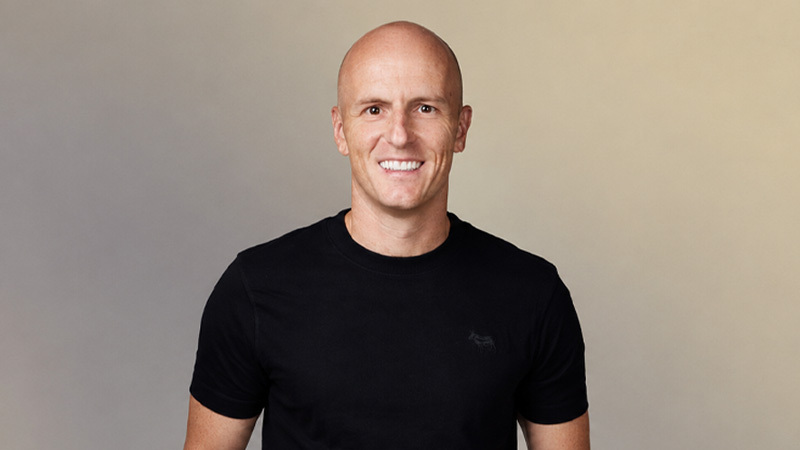
Jonathan Doerr, SVP Venture Building at Disrupt, put it directly:
"Disrupt is not a fund. We build the companies ourselves."
The record backs the claim. Cloudways, bootstrapped and sold for $350 million. PureVPN, built to 3 million users. SquatWolf and part of ZIGChain, both built inside the portfolio. Seventeen years. Over a billion dollars of value created. More than 20 active ventures today.
Every dollar placed outside strengthens the system inside. Direct investments give us early signals from markets our own ventures haven't reached yet. LP positions give us a pipeline: operators from VC-backed ecosystems who become our next EIRs and FIRs. Advisory relationships with top-tier investors sharpen our own judgment before we build.
We don't invest to diversify. We invest to see further.
The Vision Is Bigger Than One Fund
Zamanat isn't building a single credit product. It's building the institutional market for Digital Shariah Assets - a category that doesn't yet exist at institutional scale. Global Islamic finance assets are projected to reach $9.7 trillion by 2029. Demand for digital, Shariah-aligned assets is growing faster than the infrastructure built to connect them to global capital. Zamanat's platform ambition spans private credit, receivables, real estate, and other real-world asset classes - connecting originators across the region with global capital through investment structuring, regulated partner routes, and digital distribution.
The first live proof point of that ambition launched this week: Zamanat Fund CEIC Limited, a DIFC-domiciled, DFSA-regulated private credit fund with a target size of up to $100 million, issued as Investment Tokens on ZIGChain.
The Fund Proves the Mechanism
The Fund directs capital toward GCC businesses whose financing needs traditional lending doesn't meet - supporting national priorities like Saudi Arabia's Vision 2030 and the UAE Centennial 2071. Structurally, it's a DFSA-regulated closed-ended Exempt Fund, classified as a Credit Fund, managed by Truleum Venture Partners and administered by Apex Group. Fund interests are issued as ZM1 Investment Tokens on ZIGChain, inside a regulated, whitelisted environment, open to investors who meet DFSA Professional Client criteria.
Zamanat CEO Umair Tariq put it plainly: “Strong GCC businesses, both in my personal and professional experience, keep struggling to access growth capital despite sound fundamentals, and the Fund exists to build a credible route between those businesses and institutional capital” - a first live proof point for bringing regional private credit into a regulated digital structure.
"The opportunity is not simply putting assets onchain. It is making them institutionally usable. The next phase of tokenization will be won by firms that can connect financial structuring with compliant distribution and liquidity channels." - Umair Tariq, CEO (Zamanat)
Tokenization is the infrastructure layer here, not the product. It expands access to a traditionally hard-to-reach asset class without changing the underlying investment or credit profile. ZIGChain gives institutions a compliant settlement layer, purpose-built for exactly this kind of regulated product. Truleum as the Fund Manager is responsible for all regulated fund-management activity. Apex Group provides institutional administration and controls from day one. Each piece already exists elsewhere. Zamanat is the first to assemble them for GCC private credit in tokenized form.
Regulatory Note:
The Fund is structured as a private credit vehicle, not an Islamic Fund, and carries no Shariah-compliant marketing claim. Digital Shariah Assets is the category Zamanat is building toward at the platform level.
Why We Invest Beyond What We Build
Disrupt does two things with capital that sits outside our own ventures. We make direct investments in startups across AI infrastructure, cybersecurity, Web3, automotive intelligence, and MENA-born global brands. And we take LP positions in top-tier VC funds.
Neither is a portfolio play. Both feed the system.
Every dollar placed outside strengthens the system inside. Direct investments give us early signals from markets our own ventures haven't reached yet. LP positions give us a pipeline: operators from VC-backed ecosystems who become our next EIRs and FIRs. Advisory relationships with top-tier investors sharpen our own judgment before we build.
We don't invest to diversify. We invest to see further.
Why Zamanat Fit the Model
We do not fund ideas. We fund operators who have already found the mechanism and need capital and structure to prove it at scale. Zamanat's founder is building a regulated route between GCC businesses and institutional capital — the same discipline we apply to every company we build: structured validation, AI-native execution, embedded infrastructure.
That discipline shows up in the mechanics, not just the mission. As Doerr described it:
“Structuring work that used to take three months now takes about an hour. Same standards, same discipline - just faster. And it compounds. Every product Zamanat structures teaches the system, so the next one moves faster than the last. Deal ten won't cost what deal one cost. That is how you build a category quickly instead of slowly.”
We can't claim every investment becomes a category-defining fund. We can say this: when the mechanism is right and the operator has already done the hard part, the odds shift in our favor.
We build. The Invest Function sees around corners. Together, they compound.