Contents
Amsterdam, Berlin and Istanbul heard how founders build inside Disrupt.
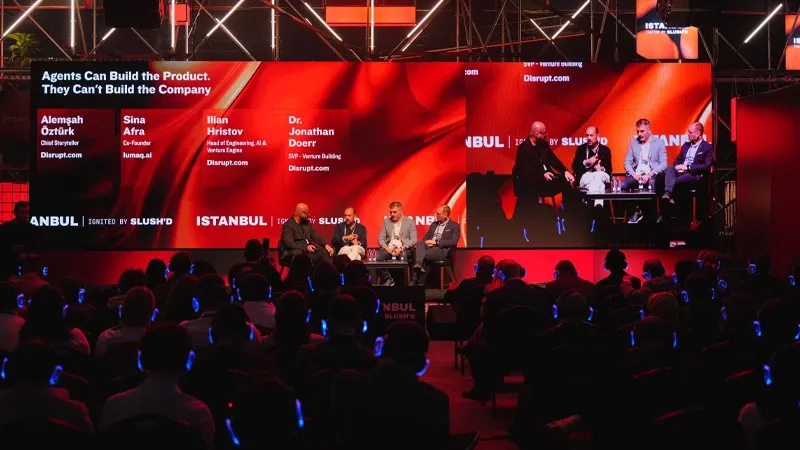
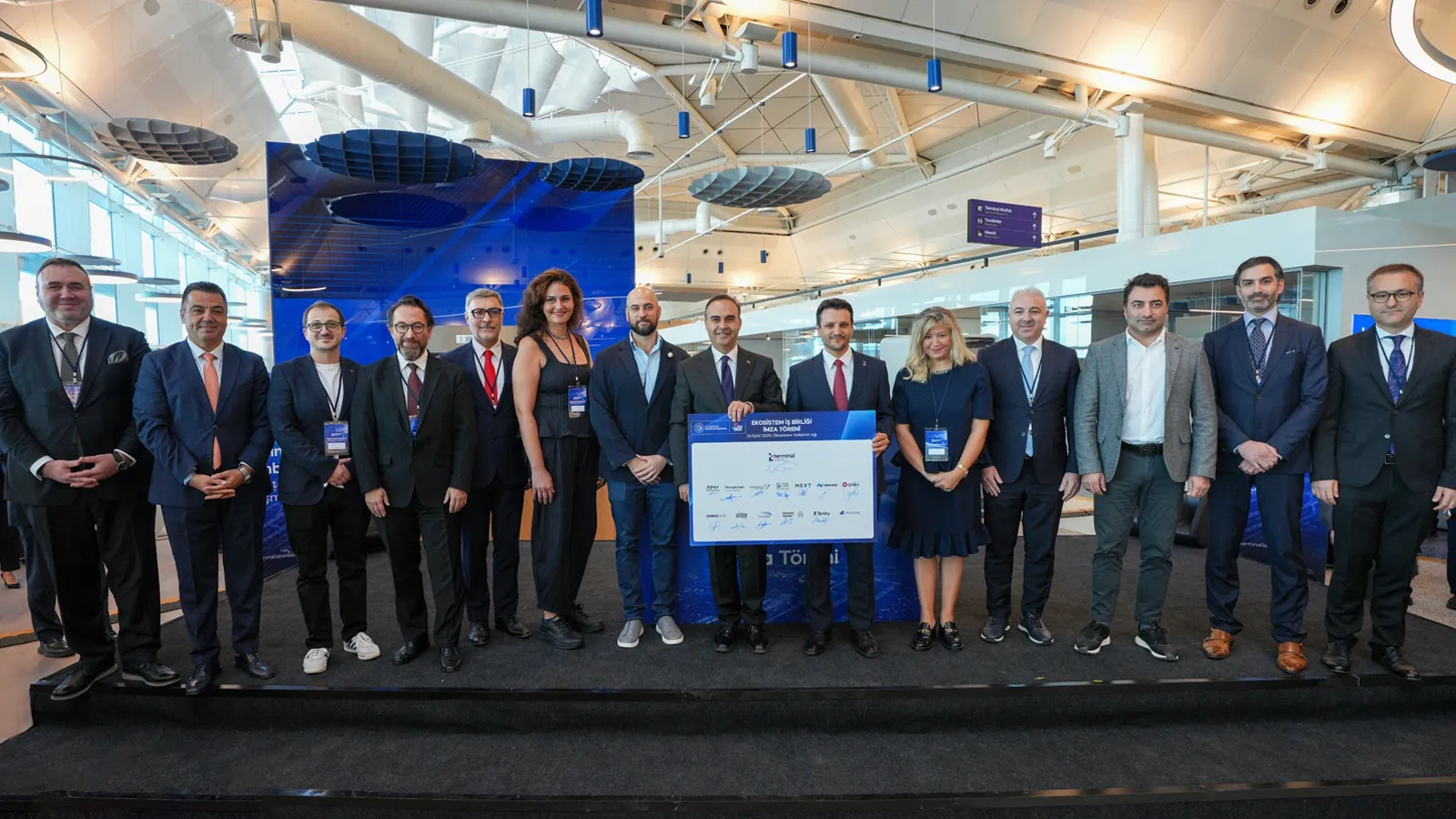
Between October 7 and October 13, Disrupt ran the Builder’s Meetup in three cities. Amsterdam during World Summit AI week at StartDock Coworking Singel. Berlin at Betahaus in Kreuzberg. Istanbul at Kolektif House Levent with Slush’D, three weeks after we signed on with Terminal İstanbul.
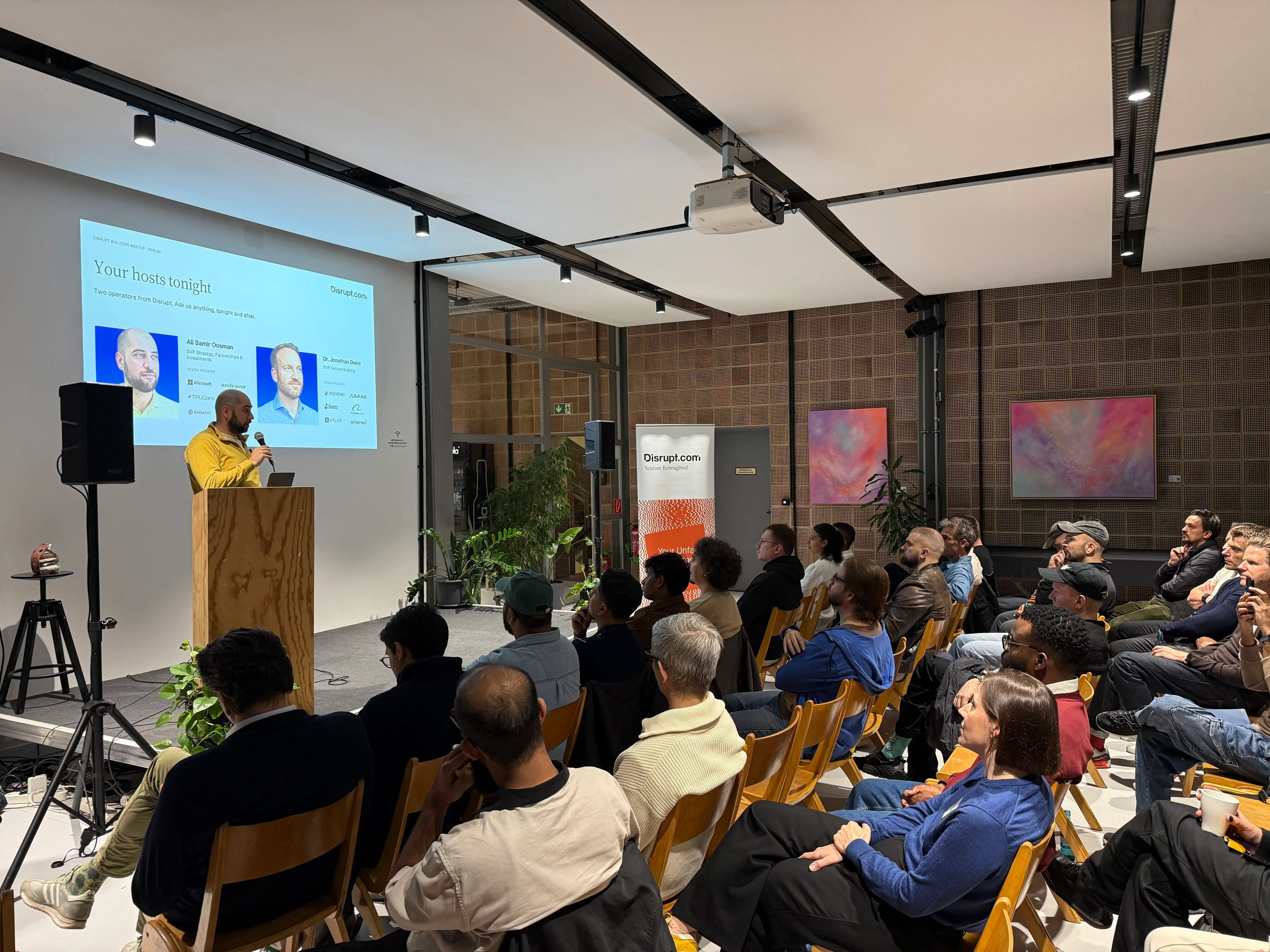
Dr. Jonathan Doerr, SVP – Venture Building, and Ali Samir Oosman, SVP – Strategy, Partnerships & Investments, took each room through how founders build inside Disrupt.
Three things every room heard.
How a venture moves from 20 ideas to an investable company.
What a founder gets at each stage.
What a founder owns at the end.
Four pieces make that work. A process. Capital. A team. Ownership. We built all four into the model, so the founder can focus on the venture.
We have done this before.
We have built companies since 2009. Our founding partners built Cloudways, which exited at $350 million. Today we run more than 20 active ventures with over $850 million in aggregate value. They include PureVPN, Squatwolf, Zignaly, Wellows, Secure.com and Zamanat. A venture built here starts with millions of customers, regulatory licenses and 17 years of proprietary data behind it.
Every venture moves through four gates.
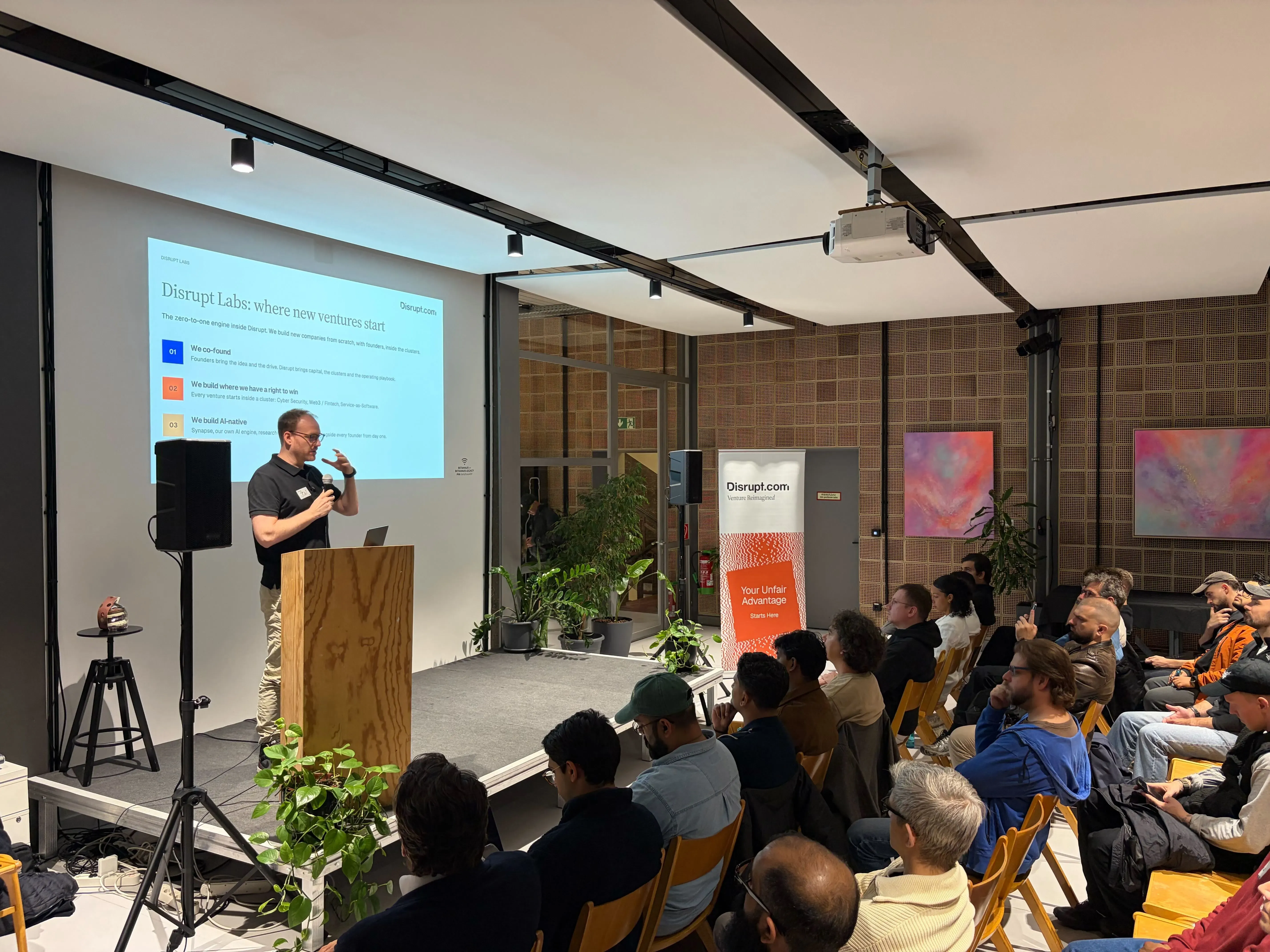
Ideation. Validation. MVP. Acceleration. Each stage has a gate, a team and capital attached.
We start with 20 ideas, not one. The founder works with Synapse, our own AI engine, which researches, builds and tests alongside every founder. Together they analyze the problem, read user signals, and choose the idea with the biggest potential and market.
Validation tests one question. Will people pay. Prototypes and small landing pages answer it before anything gets built.
At Disrupt, an MVP is not a prototype. It is real revenue, paying customers and good retention.
We learned to hold these gates the hard way. Ventures we moved into build too early had an unconfirmed ICP and go-to-market. Now the first two stages come before any money moves.
Capital comes with every gate.
We finance every stage with our own capital. Founders do not raise.
When validation holds, the first investment committee commits $350K and above to build the MVP. When the MVP proves traction and retention, the second commits $1M-$2M for Acceleration.
Every venture also gets more than $100K in partner credits from AWS, OpenAI, Anthropic and others.
The team is already inside.
At the first investment committee, the founder gets a tech lead and a go-to-market lead. A mini CTO and a mini CMO. A team of three.
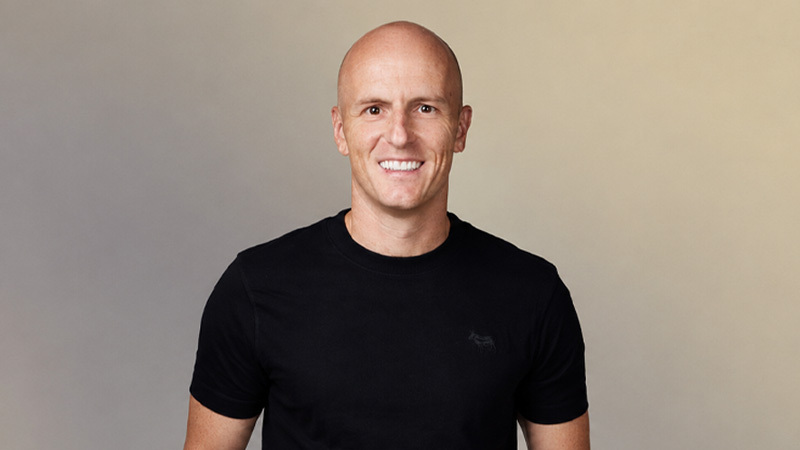
Jon has built on every side of the table. He was co-founder and managing director of Jumia Nigeria from 2013 to 2015, and Jumia later listed on the NYSE in 2019. He was co-founder and co-CEO of Daraz until 2019, after Alibaba acquired it in 2018. He also built and sold his own health tech venture in the Gulf, and built Antler's Middle East fund.
You don’t need to hire the people. You can do this all within the organization. - Dr. Jonathan Doerr, SVP – Venture Building, Disrupt.com
Ownership follows the role.
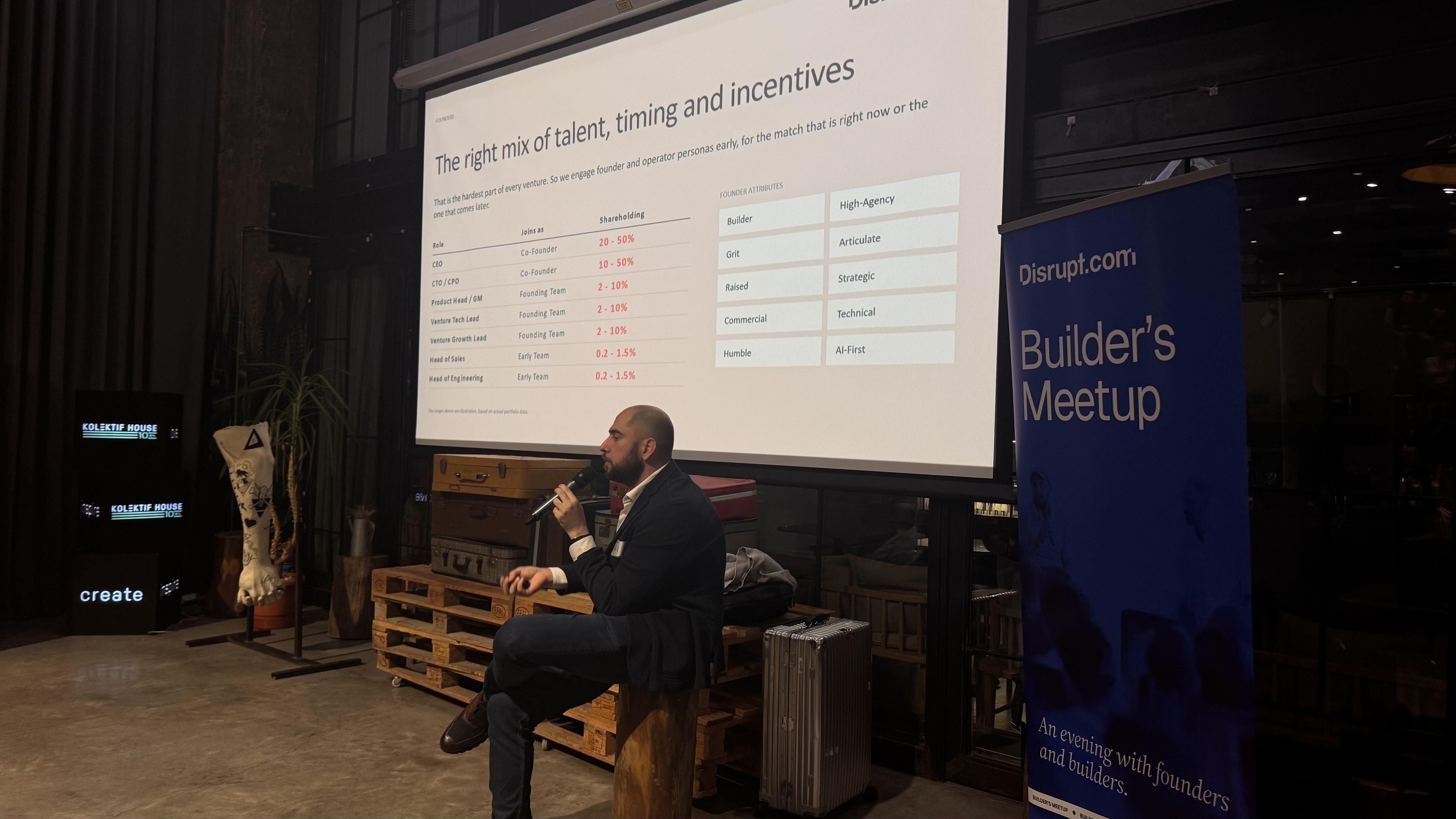
The right mix of talent, timing and incentives is the hardest part of every venture. So we engage founder and operator profiles early, for the match that is right now or the one that comes later.
Founders join as co-founders, not employees. They earn a salary plus equity from day one. A CEO joins as co-founder and holds 20 to 50 percent. A CTO or CPO joins as co-founder at 10 to 50 percent. The founding team, product head, venture tech lead and venture growth lead, holds 2 to 10 percent each. Early hires in sales and engineering hold 0.2 to 1.5 percent. The ranges come from our actual portfolio.
No idea is required, and no team. Most of our ventures start from our own validated pipeline. Senior operators can join a venture as co-founder or as part of the founding team, matched when the timing fits.
We look for the same attributes in every founder. Builder. High-agency. Grit. Raised before. Commercial. Technical. Strategic. Articulate. Humble. AI-first.
The trade is equity for everything else.
A founder who builds alone keeps more of the company. A founder who builds with us shares it.
What the founder gets in return is everything that usually stalls a venture. Capital without fundraising. A team without hiring. A salary while building. An AI engine from the first day. Gates that catch the mistakes we made ourselves, before they cost the venture.
Building alone means doing all of that while also building the product. Building here means building the product.
AI shapes the build from day zero.
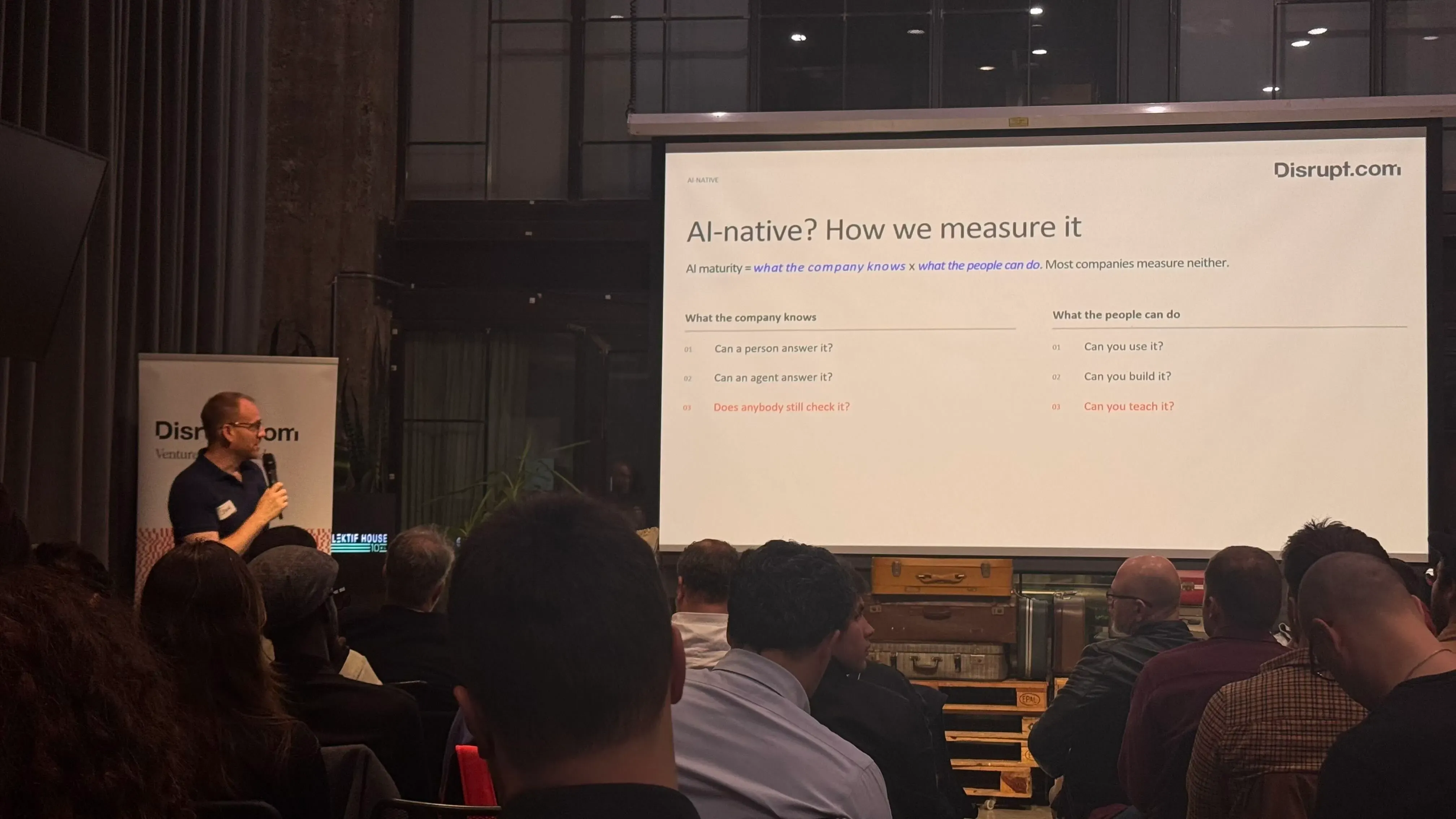
Every team uses ChatGPT or Claude now. That does not make a company AI-native. We measure AI maturity as what the company knows multiplied by what the people can do.
What the company knows. Can a person answer it. Can an agent answer it. Does anybody still check it.
What the people can do. Can you use it. Can you build it. Can you teach it.
Every venture starts with a shared knowledge base, so anyone in the organization can see what the venture is and how the product should look. Then we build through spec-driven development.
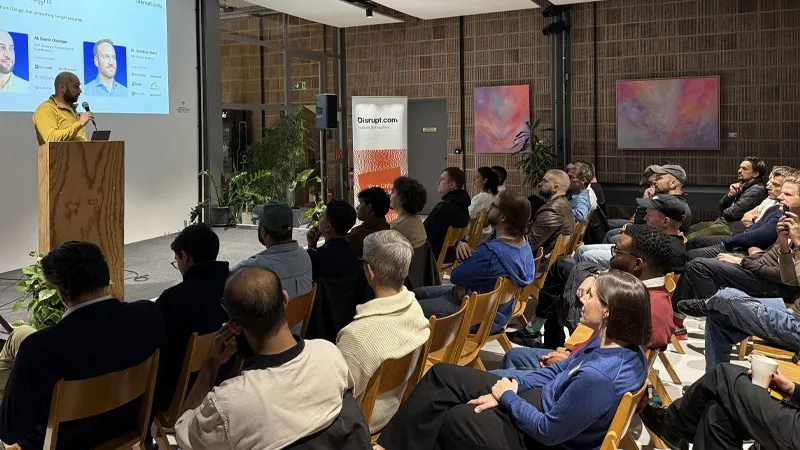
Jon Doerr presents Disrupt’s AI maturity framework to founders at the Builder’s Meetup in Istanbul.
Builders came to see the model.
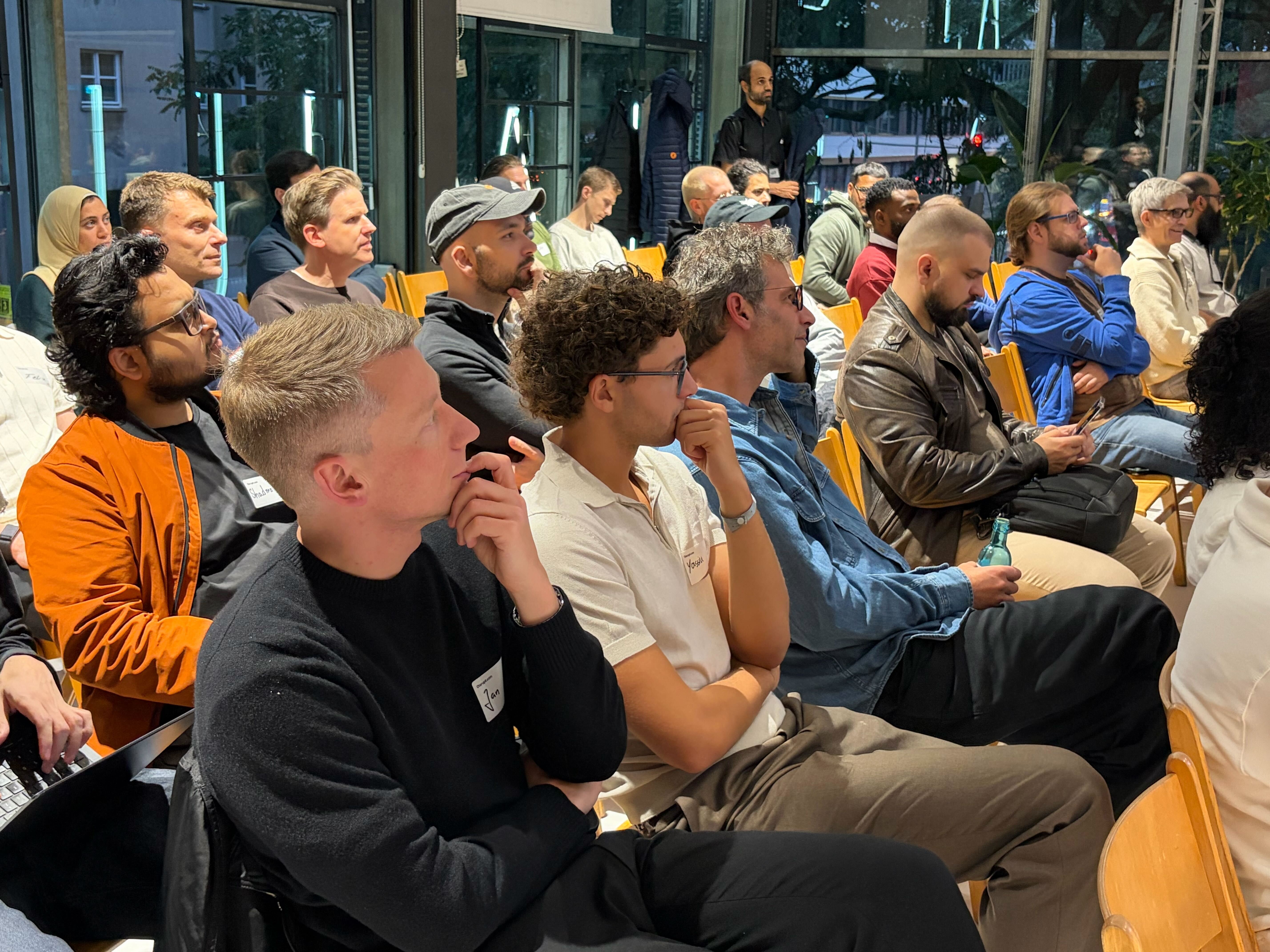
The rooms drew founders, operators and engineers. An operator at a legal tech company in Berlin came to explore what he could build. A control engineering PhD came with an energy management startup. An AI/ML engineer came with projects he wants to build with us.
Many arrived with only a rough idea of what Disrupt does. They left knowing how the relationship works, and how AI enters a venture from the first stage.
Most founders spend their first year raising capital and hiring a team. Here they spend it building the product and proving that customers will pay. That is the trade. - Dr. Jonathan Doerr, SVP – Venture Building, Disrupt.com
Builders and operators who want in can apply to co-found.
Three cities heard the same model. Capital to build. A team to grow. Ownership that follows the role. We are taking it to the next room.